DEVELOPMENT CHARGES — WHO PAYS FOR GROWTH? Part 1

October 5th, 2026
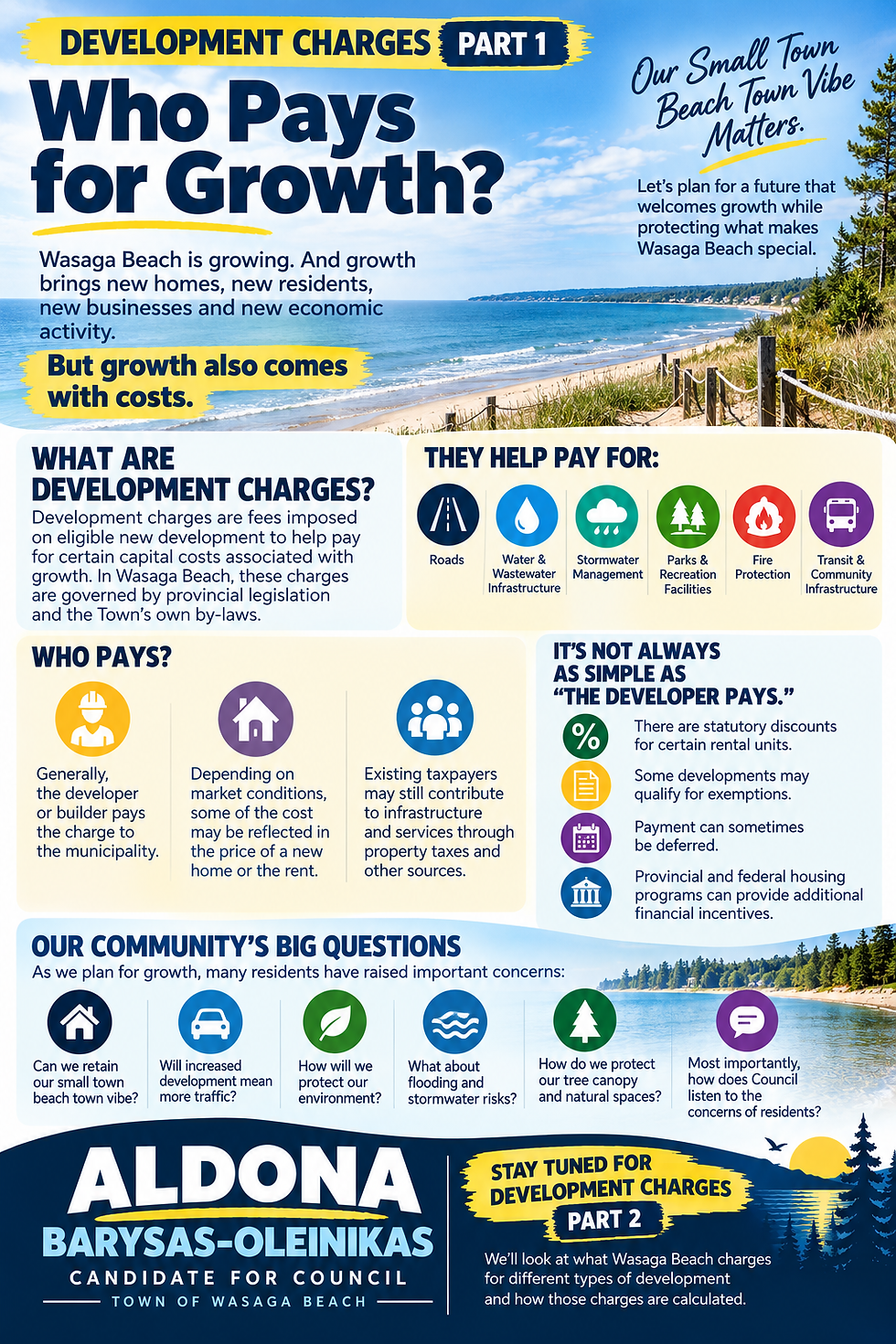
Wasaga Beach is growing. But as we welcome new homes, new residents and new businesses, we need to ask an important question: How do we manage growth while protecting the small-town beach-town vibe that drew so many of us here in the first place?
Residents have legitimate concerns about increased traffic, flooding, stormwater management, environmental protection and preserving our tree canopy and natural spaces.
And there's another question I believe is just as important: How does our Council listen to residents who are concerned about the pace, scale and impact of development?
Growth should bring opportunities, but it must also be planned responsibly.
We need to understand the costs, the infrastructure requirements and the long-term implications for our community — and we need meaningful opportunities for residents to be heard.
These are important details when we're talking about housing affordability, development and the cost of growth.
I believe we need to be asking reasonable questions about development: about how it's financed, what infrastructure it requires, and how we protect the interests of existing taxpayers.
Over the next few posts, I'll be looking at:
📌 What Wasaga Beach charges for different types of development.
📌 Where development-charge money goes.
📌 The discounts and exemptions available for rental housing.
📌 What happens when payments are deferred.
📌 How provincial and federal housing incentives fit into the picture.
📌 What all of this means for Wasaga Beach taxpayers.
That's why I'm launching this series on development charges. We'll look at the numbers, the rules, the discounts and exemptions, and what it all means for Wasaga Beach taxpayers.
I'm for informed decisions, responsible planning, transparency and a community where residents have a voice in shaping our future.
These are important details when we're talking about housing affordability, development and the cost of growth.
I believe we need to be asking reasonable questions about development: about how it's financed, what infrastructure it requires, and how we protect the interests of existing taxpayers.
It's about understanding the numbers, asking good questions and making informed decisions about our community's future.
Because if we're going to talk about growth, we should also talk about the numbers.
Thanks for listening!


Comments